Sunday, March 9, 2008

Saluting Youth

The other day, in accompanied my mother to her bank so that she could withdraw her pension from the bank (a nationalized bank!) she had a hip fracture some months back and although the bank was is within walking distance, she has lost the self confidence to make it to the bank on her own.

The first thing we had to do once we entered the bank premises was to obtain a token. This was the rule even though it was the middle of the month and the bank was empty. But the bank – though a public sector one has gone high tech and instead of the brass tokens that were handed out a decade or so ago (it has been a long time since I actually went to a bank!), they have installed a gadget where you press button and a piece of paper with the token number oozes out of the opening of the gadget which looks a bit like the credit card reading machines in shopping malls.

The man who attended to us at the counter was a man who looked as if it wouldn’t be too long before he himself would be queuing up where my mother was and some other guy would be sitting on the other side of the counter. I thought a man like that would be sympathetic to a senior citizen and her requirements but I was to be proved wrong. As soon as we had presented the cheque which my mother had spent all afternoon writing so that she would get it right, the elderly clerk observed that some piece of writing on the cheque was not visible enough and she should either re write and resign the cheque or write a fresh one.

When I took it back, my observation was that every thing was perfectly legible even though it was true that a portion of the cheque was a bit fainter may be than the rest. But it was certainly nothing much to make a fuss about. By the time I came back my notions about PSUs and the associated images were of course reinforced all over again, but more disturbingly, I came back with some freshly injected notions about age – and whether it was a true aphorism that you cant teach an old dog new tricks.

In my bank the atmosphere is distinctly youthy. There are a few cabins but though they have boards dangling over them, and they are more in the nature of large cubicles. Usually they are not occupied – the folks sitting there are out some where manning some counter dealing with customers whom the bank calls clients. The bank doesn’t seem to have any clerks or if they have, you cant make out who is one. The person who is sitting down with you to an answer a banking query today could be at the teller window tomorrow dispensing cash or in the back office the day after.

But of course this is not a comparison of banks, this is more about attitudes – the young and the old and some of that rubs off. Most of the nationalized banks are close to a hundred years old and most of the newsy private banks are a decade old. It is simplistic to say that they young are all good and great and the old are all cranky, hide bound souls but there is a distinct freshness with which one does business with the young.

But coming back to my bank when you grab one of these young people – they seem forever in a hurry and their attention span to listen is pretty limited, the gut reaction is to try and help – think out of the box if necessary but provide a solution. No they are not breaking any laws, but they are able to think unconventionally, call up a colleague on the spot on their mobile with you sitting right in front, and within minutes you have an answer.

This “can do” attitude is infectious and helpful. Sure the bank wants my business, but so does the public sector bank of my mum. But the old men and women out there have al the time to listen provided you get your tokens and got to the right counters and said your salaams but having heard you out, they will use their newly gained knowledge to only tell you that the problem you thought to be relatively simple is actually more complicated and twisted like knots.

May be I should go out too and make a pitch for younger leaders, parliamentarians and others to be given more roles and responsibilities in running the country; my small example at the bank tells me. The old have heaps of knowledge but they use their knowledge to not solve problems but tie up the whole thing in complicated knots. The young relatively speaking know less, but they use the little that they know to tackle the issues and give life a push forward.

As Asif Zardari was saying the other day about Kashmir; may be it is right to keep the issue in cold storage till all of the older generation who know every thing about the dispute first hand fade away and then let a later generation with less knowledge but perhaps better perspective tackle the matter dispassionately. May be he was right. And some advice for the common man - if you want less red tape and more banking choose a new generation bank; if you want a free course on banking laws and lack hobbies to pass your time – go to a nationalized one.

Friday, March 7, 2008

Migrants are Everywhere


In the midst of all the talk about the migrants in Mumbai and whether they are a burden or an asset to the city, I came to visit my mother in Kolkata. She lives in the Ballygunj area, once (probably still), an extremely elitist old money colony of the Bengali elite. After uninterrupted Left Front rule in the state since 1977 which effectively cut down industrialization and jobs for the educated Bhadrolok class, most of the young people left the city and today a large part of old South Kolkata is decaying buildings and elderly residents. The ambiance is unmistakably old world Bengali. So it was with some level of curiosity that my mother announced that a couple of girls who spoke Hindi had come to live as paying guests in the neighboring house.

In a culture, where people are classified as Bangali(Bengali) or O Bangali( non Bengali) with no grey shades in between, the arrival of the girls who would chatter away in Hinglish is currently still an amusing phenomena as they bring in life into an otherwise deadened community. But some disquiet is clearly there. What happens next? Some more girls coming in paying guests? Boy friends? Parties and Loud music? No one quite knows and every one is keeping their fingers crossed.

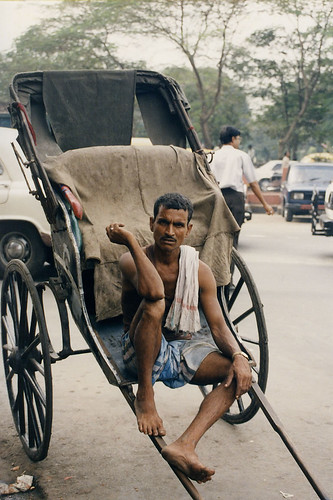
The only non Bengalis people in the area are aware of are Marwari builders trying to buy up their mansions and whose ostentatious life styles are looked upon with contempt and at the other end, the Bihari rickshaw pullers and laborers – generally looked upon in Kolkata with pity rather than anger. And yet can some Marwari families and Bihari laborers who have been in the city for generations and who speak the language and idiom with a rare fluency that will always elude the probasi(non resident Bengali) be called sons of the soil ? That question has never been attempted.

The situation in Delhi is far more interesting. The original people of Delhi – the folks who lived in Shahajanabad – Ballimaran, Chandni Chowk are today miniscule. The whole of that is captured within one parliamentary constituency out of Delhi’s seven. The others who are authentically sons of the soil are the outlying villages – Narela, Najafgarh, Badli, Samaipur and many, many others. These are and always have been villages and very rural except that the city has grown all around them and suddenly they find themselves befuddled.

The bulk of the people who live in Delhi today are migrants and a big portion are people displaced by the partition and who have come in from what is now Pakistan, gone into business, made money and bought property which they let out often by putting out classifieds in the daily newspapers. A typical transaction where the lesser is a migrant, the prospective tenant is also a migrant will reveal a lot. After scanning through the classifieds and short listing a few houses, a phone call is made to the landlord in the phone number listed in the advertisement and a time to get together is fixed.

Once the parties have got together and the opening pleasantries exchanged, the land lord asks the key question – what is you shubh naam? - Your good name please? A hush accompanies the question for in that question lie a hundred answers. If I am typical (I am not but that is a different matter…)my name will reveal to a waiting audience, not just that but my caste, my language, my religion, my dietary habits and possibly even my political ideology. It might even provide significant clues as to my occupation, my income and my life style. All this is largely based on stereotypes but when a dialogue is happening between strangers, pictures and images loom pretty large. The interesting thing about these interviews is that although a large portion of the land owners are North Indians and a big majority landed as displaced people needing housing in the post partition era, North Indians are at the bottom of the ladder when it comes to picking tenants.

Echoing Delhi’ Lieutenant Governor’s remarks most land lords believe that among migrants into the city , the South Indians are the favored lot as most believe that they are reliable law abiding, not aggressive and in general law abiding. Most advertisements are too discreet to say this upfront but some actually do so. The classification typically allows only North and South, so when I say I am from Bengal, there is momentary confusion but thus far I have passed the test. However I don’t know how Muslims with a name like Abdul Aziz would fare or a Christians with a name with Anthony Gonsalves would fare.

Eventually possibly xenophobia is ingrained in our genetic make up; but what we do differently in different places is respond more or less humanely recognizing that trade, travel and eventual migration is just as much part of the human genetic make up. Indians, who constitute one of the world’s largest Diaspora and have received varying levels of welcome at different places and even different times, should have assimilated lessons connected to migration and even reverse migration long ago. But we haven’t done that.

The Shiv Sena may say that Biharis are an unwanted lot every where and like Tejinder Khanna’s statement that maybe a politically incorrect truth. But perhaps it will take a man of Abdul Kalaam’s vision to make Bihar a more attractive place to live and work, so that a day may come when people or at least a section of them actually revert back to their place of origin. Isn’t that beginning to happen a bit – as India changes, many NRIs who went out in search of lucrative pastures outside, are now finding the grass increasingly greener this side of the fence ? Migration is a complex phenomenon- it will take a lot more than raving and ranting to make a rational sense out of it and draw up humane policies that will make it less necessary for people to migrate out into unwelcoming shores.

Wednesday, March 5, 2008

The World of Widows


When Deepa Mehta was making her film” Water”, one of the controversies that latched onto the book was the allegation of the renowned Bengali author and current president of the Sahitya Academy , Sunil Gangopadhyay alleging that the movie was based on portions of his well known work “ Shei Shomoy”, translated into English as “ Those Days”. That may not be true because the novel is set in the late nineteenth century whereas Deepa Mehta has set her story in the midst of India’s freedom struggle with John Abraham playing a freedom fighter.

However the fact really is that Deepa Mehta could well have chosen to base her film in the 21st century and not in the 20th where she did or in the 19th where Gangopadhyay’s novel is set and frankly little would have changed; there is little that would have changed. The Bengalis of that day packed off their widows then to Kashi for a life of abstinence, prayer and penance while the men lounged in pleasure gardens. The widows, many of them child widows, did not have to worry about prayers – there are and were men in plenty to “take care” of their needs. Such scenes are shown in “Water” as well as in Sunil Gangopadhay’s novel.

I guess that the opposition that Deepa Mehta faced when she made the film would have been a bit muted if these were facts of the past because it is easy to say to others that it was some thing that happened in then…. We are modern today and we have moved on and these child widows and women living lives as depicted in the film aren’t lived in any more. That would have been a nice position to be in except that we aren’t. The sad fact is that in spite of untiring efforts of reformers like Ishwar Chandra Vidyasagar and his friends and many others subsequently, widows as well as child widows abound and exist and not very far from India’ National Capital—may be about 150 KM at the most.

Vrindavan is the town most people have heard of because of its association with the childhood of Krishna and the many other associations with his life. However not many my know that the Vrindvan of Krishna was a town in ruin by the middle ages and it was more or less recaptured by the jungle by the Bengali Vaishnavite mystic , Sri Chaitanya Maha Prabhu, who in 1515, more or less founded the town that we know today as Vrindavan.

The fact that the Vrindavan rapidly became a place of pilgrimage where the wealthy feudals ventured once a year to pay obeisance to the deities and the added advantage of being even further away from Bengal from Kashi meant that Vrindavan soon became a place where one could dump one’s widows. Many mansions built by the elite of the day, now mostly in ruins and decaying by the day are still to be seen in the town and it is possible to imagine that as in Varanasi the men of the day came to Vrindavan too with their retinues for pleasure as much for piety.

In the movie, apart from an opening reference to ‘the woes of widows’ in the Laws of Manu traditions regarding widows are not fully explained outright but unfold within the story. The widows live lives of enforced asceticism, atoning for the bad karma that has that has killed their husbands. Their unadorned white saris and shaved heads mark them for all to see. In life too , there is often little to differentiate the reel and the real as perhaps symbolized by the widow’s white worn by ” chuhiya”, the child widow in “Water” and the scores of widows like the ones in the picture above who wander the streets of Vrindavan, much like cows who incidentally fare better than the widows in terms of board and lodge with traders funding plenty of gaushalas in the town. I wonder why Sunil Gangopadhyay got agitated that Deepa Mehta lifted her script from ” Those Days”. A man of his eminence should have known better. A lot of abominable things that we thought only happened those days are still happening “These Days”.

Friday, February 29, 2008

A Train Diary

The first time I boarded a train was in 1965 to travel from Delhi to Howrah. The train in question was the Toofan Mail as it was then called and unlike today, where the train still remains a shadow of its former self, in those days it was still in spurts able to run like the Toofan it was named after. It was actually quite a prestigious train those days and the only one exceeding it in status was the Air-Conditioned Express, popularly called the Vestibule Express. It was the first or at least one of the earliest trains in which the vestibule facility was available. The train was still pulled like most others by steam engines and I remember the coal getting into my eyes as I poked my head out of the window to look at the passing country side.

Once I reached Howrah, for a day or so it still felt that I was in the train for at least a day with the train’s rocking motion still drifting in as soon as you closed your eyes. Even with the eyes open, the doors and windows appeared to be moving away like the trees and the electric poles from a moving train. On that occasion, the journey itself was more enjoyable than the final destination and since then it has always been that way for me. Innumerable train journeys later, once I have settled into my seat and if no one is pushing and jostling, the trip is still far more enjoyable than journey’s end.

Unlike many, I just love train, pantry car and platform food. I have had them all the Puri Subzi in leaking leaf plates, the bread omlette on numerous station platforms, the “veg” and “non veg” offered by the pantry car attendant armed with a scrap of paper and a stub of pencil and every thing in between including the “continental” on the Rajdhani Express. Of course there is more variety on the platforms- from the well known ones like the pedhas of Mathura and the pethas of Agra to the lesser known ones. Such as the Biryanis of Bhusaval and Manmad, the mihidana and sitabhog of Burdwan or Jalebis and Kachoris at Mawli near Udaipur.

The condition of the train and the mannerisms of your fellow travelers will tell you about the diversity of the country we live in. South bound trains are typically orderly. One can travel in reasonable comfort even in sleeper class as the flow of invading passengers who ask you to “adjust” is much fewer. Itarsi is the station near about which the Rishi Vashishta the legendary figure who crossed over beyond the Vindhyas into Dravidian India might have taken a sojourn as once trains have crossed the station, the evidence of North India beginning to blur in many ways beginning with the food. The Daal for example begins to get replaced by Sambar (they taste the same though in the train!) and Idli and Vada begin to make an appearance in the breakfast menu and the snacks by the train vendors.

Once in a while you get to see scenes that you might forever. One of them that I do is the memory of an elderly Muslim gentleman settling down to say hi evening Namaz in the train. It was not easy to figure out which was West in a moving train, nor to perform the necessary ablutions but he managed some how, spread out his mat on the upper berth and unmindful to all his surroundings and even a few staring passengers as well as many granting him grudging respect, he went through his prayers. Today when it is often the fashion to wear your religion on your sleeves and with aggression, the old man’s humble but clear assertion of his beliefs oblivious of any thing else for those few minutes reminded me of what true spirituality is all about.

Today when there is all this talk of competition between low cost airlines and trains and what each has to offer, the talk mostly is all about time savers, costs, short haul, long haul and such commercial vocabulary, I am reminded that journeys are not just about times and distances - it is also about the experiences- the ones you contribute and also the ones you collect over the years and that then shape and enrich you-- perhaps the length of the journey does not matter as much as its depth does when you have reached your destination and are settled in your arm chair reminiscing. Some times a non stop journey is not as invigorating as one with interminable stops.... Just some times.

Tuesday, February 26, 2008

We have such thin skins.....

Some months ago, I got a chance to see Deepa Mehta’s film titled “Water”. It is part of the trilogy of “Fire”, “Earth” and Water. The film had made news for two reasons- Deepa had courted controversy when “Fire” delved into lesbian relationships, and then “Water” began shooing the plight of child widows at Benares, igniting the wrath of Hindu Fundamentalists and also attracting a law suit from the noted author Sunil Gangopadhyay who claimed that the film was based on his acclaimed novel “Those Days”.

“Water” is a pale shadow of what it might have been. After shooting was disrupted at Benares, the cast as well as location got dismantled; Deepa Mehta shifted her location o Sri Lanka and recruited a new cast. She tried to recreate with very plastic success, the ghats of Benares in Sri Lanka but the artificial umbrellas and ghat props would not deceive any one who has been to Varanasi.

Of course “Water” is not the only film thus affected. Films in recent memory that have run into problems include the recently released “Jodhaa Akbar”, The Da Vinci Code, as well and of course politically tinged films like “Mangal Pandey-The Rising”, Shyam Benegal’s film – “Netaji, the Forgotten Hero”.

The Indian Express has been worrying about a growing tribe of Indians who have a thin skin and flaunt it too and is wondering as to why we are so quick off the block to take offence? It is an important question to ask ourselves. Of course the editorial speculates that perhaps the reason is that India is a democracy all right and so there is freedom of expression and which people feel free to use but society is not liberal enough and so the space for tolerance is limited.


But perhaps the issue to investigate is not so much the problem but the solution. Yes India is a democracy but we have a long way to go and to so we have learnt to take the freedom of expression that the constitution has given for ourselves but perhaps not learnt to provide the same right to others who think and act differently from us. But since India is a society which is millennia old, it can not easily shed its norm cannot be dragged by the scruff of its neck into a liberalized climate. So perhaps, while learn to accept the fact that we do indeed have a thin skin, perhaps we should also look at solutions that provide platforms for various points of view to be expressed in a way that is not so openly divisive.

Is that possible? Can we at least become thick skinned enough to at least others to speak, write and make films of their kind and at least allow them to live even if we never get to quite like them? A truly liberal society of course would allow a climate where a lot could be said and then the dissenters would also know how to express their dissent without fear of either courting or cultivating civil unrest. But we are yet far from those gates.

In school, there was a word that we learnt – xenophobia – the fear of all things foreign. In all those years since school, it seems that the word and the world in which we live today have both shrunk their borders and today the line between “them” and “us” is often as fragile as glass. Or to put it differently, if you are not with me in my opinions and it may be in the shallowest of matters, you are against me and different from me.

I have neither the time nor the inclination to look for signs of our common humanity and build on that. I would rather reach for the stone that will smash your window pane or your head, so that I can retreat to the privacy of my den and preen that I have been a bully yet one more day, ridding the world of that dreadful menace – those who do not think the way I do. Yes, Xenophobia is a frightening word, especially when it has shrunk so much that the borders are constantly closing in around us.

Friday, February 22, 2008

Agression in the Air


A few weeks ago Delhi’s Lieutenant Governor, Tejinder Khanna made a faux pas when he admitted in public what most people living in North India at least would admit to in private, though not perhaps in public that adherence to the Law in the Northern Parts of the country is quite a bit tardy. This is what Tejinder Khanna said “

“In this region, the situation is such that commonly it is a matter of pride to violate the law. The behavior pattern in south India is such that the people naturally stay within the limits of the law,” he said, addressing a function to launch Delhi police’s traffic patrol scheme. He remarked that there is much better compliance of law in south India and that too without any external pressure. “It is a specialty of north and west India that the people feel a sense of honor and pride in violating law and boasting that no action has been taken against them,” Khanna said.

Was Tejinder Khannna too way off the mark ? Breaking or not breaking the law and how many do or do not is a matter for the statisticians to data crunch and tell us what the powers that be want to hear but those who live in India would know of a certain aggression in the air, every time one leaves the house. This aggression need not always translate into crime but often does and the newspapers – especially the city sections reflect it in several ways – be it in the tracking of the number of people killed in blue line buses running over people in their hurry to get their faster or the squabbles with by the scruffily bus conductor as whether the fare to a particular point costs Rs.7 worth of a bus ticket or a Rs.10 one.

Certain kinds of aggression can be liberating in that they set you free to pursue the goals of Citius, Altius, Fortius." "Swifter, Higher, Stronger which are of course the motto of the Olympic movement but can be used else where to pursue any noble goal in life. But the bottom pinching , high speeding, vulgar speech driven aggression visible in North India and even more so in Delhi where I live and read some of these things in the morning paper, experience a few in the course of the day, and then come back to watch some more in the news channels on television is no customized meritocracy to move society to upward levels. this leering, domineering aggression is all about getting ahead not by raising the bar for myself but by lowering the bar in general by brutally crushing self esteem, and then crossing over the lowered bar in a crude wild west fashion. It is easy to cross the finish line by lowering the bar and then crippling the opposition, so that there is no legitimate opposition left in the race but there is little pride of achievement in such a victory, only the shallow gloat of the winner of the rigged race.


So deeply embedded is aggression, that it has been appropriated by the State even, and often no symbol of authority is so disgusting than the sound of the police lathi banging menacingly on the street, bazaar or the railway platform as the constable signals his presence and authority by dashing his stick on the ground as he moves clearing space for himself. The lathi of the police man is not even a semblance of safety and security as much a tool of undisguised aggression and dominance.

There is no point in issuing cosmetic statements to ruffle feathers and talk of misquotes when aggression, quarrels and violence with open contempt and disdain for the law is so openly visible. Any one who even expresses a desire to do things the right way( try accosting a Delhi auto rickshaw driver to go where you wish and at the rates prescribed…..) is immediately turned into an object of ridicule and snigger…. No irrespective of whether the Lieutenant Governor said things which are politically incorrect or not, the import of his statement can not be just swept away like dust under the carpet. Aggression very much lies in the air. You have to just step outside the threshold of our houses to sniff and inhale it….. Not a far distance

Wednesday, February 20, 2008

The Vanishing Joker : The Decline of India's Circuses

India's first ever amusement park, 'Appu Ghar', set up shortly after the 1982 Asian Games operated for the last day on February 17, the last day of its operation. Set up almost on the lines of Disney Land and a brain child of Prime Minister Indira Gandhi, 'Appu Ghar' closed down in compliance with the orders of the Supreme Court after more than 23 years of its existence to make way for the Delhi Metro and the Supreme Court Library.

There is of course a time for every thing- a time to flourish and a time to fade away and that is what has happened to Appu Ghar. It served the purpose of entertaining a generation and now has gone. But Appu Ghar is not the only institution that is on its way into history. Another institution that is on a life line and appears jaded when seen at all is the institution of the circus – The 130-year-old Indian circus industry, once the favorite form of entertainment with family and friends, is struggling to survive. In 2002, the Indian Circus Federation had 22 members; today, it has only 14.

Circuses in India are hemmed in from every side. They have earned the wrath of animal rights activists. The former Union Minister of Social Justice and Empowerment, Maneka Gandhi, banned the use of bears, monkeys, tigers, lions and panthers in circuses in October 1998 effectively putting circuses in coma. Most of small town India looked forward to circuses as their only means of having some glimpse of wild life as only the bigger cities and towns have zoos. It of course open to debate as to how cruelly the animals were or are treated in circuses, keeping in perspective that In India, circus performers themselves remain stigmatized, a far cry from several western countries where it is often an acceptable, respectable choice for a youngster to make, and where schools for wannabe circus artistes, scholarship programmes, and even websites with 'jobs available' and 'the latest in juggling' posted on them flourish.

Indian circuses have been accused of using children in their acts and using child labor and this is a catch 22 situation. Poor revenues often mean that good wages cannot be paid even if one wants to and besides when there is a steady stream of children waiting in the wings to learn and earn perform in hazardous acrobatic tricks, there is little incentive to do so. “Children, especially girls form the bulk of the performing artists in the circuses, as they are the main crowd attractions. A majority of artists in Indian Circuses are Nepalese girls who have been trafficked from the interior areas of Nepal under the guile of a great life at a very young age

Then there are environmental hazards, particularly fire. Over crowded circus tents with cramped seating and few exits can only mean one thing – that a catastrophe is just round the corner way back in the Nineties , a fire swept the main tent of the Venus Circus in Bangalore sending it crashing down in flames onto a crowd of about 4,000 people and killing more than 60 people. Although no major tragedy has been reported since, condition in circus tents haven’t got much better as any one who has visited one in recent times can testify.

So embedded is the circus in the Indian memory, that when a circus came to town in Bangalore after a long interval , the staid and stiff upper lip newspaper “Hindu” announced its entry with undisguised pleasure. “After six years, Jumbo Circus is back in Bangalore to entertain people during the year end. The show is on at the Palace Grounds, opposite TV Tower, since December 15.” As the circus as a form of entertainment hurls towards what looks like certain extinction, it could be the last time, one will come across such an announcement.