Showing posts with label nepal. Show all posts

Friday, May 16, 2008

Rule of the Lordships

When India got independence from the British in 1947, the hard line communists made a derisive comment yeh azadi jhoothi hai and were derided for it. The communist thought that power had merely changed hands from one set of imperialists to another- that the white rulers had been exchanged for rulers of another color – brown.

ooking at the Supreme Court’s disdainful dismissal of a PIL brought by the Peoples’ Union for Civil Liberties that sought to bring judges of the apex court and high courts under the purview of Right to Information Act, it looks in hind sight that the communists were right after all. The Supreme Court armed to the teeth with the Contempt of Court, at least under the current Chief Justice at least seems to keep a scornful and arrogance distance from commoners as an elite group.

The reluctance of the Chief Justice to subject the court and its justices to scrutiny under the Right to Information Act, especially in the matter of declaration of assets is otherwise beyond comprehension. Even more incomprehensive is the Chief Justice’s smug assertion that Judges declare their assets to him. If that were enough than every departmental head could be authorized to handle their subordinate’s affairs and there would be no need to maintain vigilance departments any where !

The modern Indian judicial system has its origins in the Calcutta High Court.

The High Court at Calcutta, formerly known as the High Court of Judicature at Fort William, was brought into existence by the Letters Patent dated 14th May, 1862, issued under the High Court’s Act, 1861, which provided that the jurisdiction and powers of the High Court were to be defined by Letters Patent. The High Court of Judicature at Fort William was formally opened on 1st July, 1862, with Sir Barnes Peacock as its first Chief Justice.Appointed on 2nd February, 1863”

Like most institutions the British left behind , be it the civil service or the military or the judiciary or even the Government of India Act 1935 which to a large extent forms the backbone of the constitution, Jawaharlal Nehru who reportedly once described himself as the last Englishman to rule India; he left them unchanged. And because the changes in these institutions were not intentionally made, they remained frozen in time or actually degenerated into grotesque caricatures like when you see those turbaned and liveried waiters serving in the Rashtrapati Bhavan and Raj Bhavan functions, with the viceroy’s crest replaced by the Ashoka Chakra. To see Brown Sahebs and Babus soaking it all in after being sworn to uphold the Constitution of India which still describes India as a Socialist Republic among other things, positively reeks.

The interesting thing is that in that very fountain had of imperialism, the United Kingdom, things are changing as public pressure builds up. By agreeing to pay income taxes, giving up the royal yacht, changing some royal rules, and limiting the number of royals receiving government money, the Queen has sought to placate growing public criticism of the monarchy. Closer home, in Bhutan voluntarily and in Nepal involuntarily , monarchies and feudal cultures are being dismantled. But in India, “their lordships” that sit in judgment over affairs pertaining to a billion plus people and determine their fate in some small measure at least will bear no scrutiny on their actions and conduct through the common man’s scrutiny conducted through lawful means permitted through the law of the land. They are the new jahanpanahs and will not tolerate any lese majeste!

Wednesday, February 20, 2008

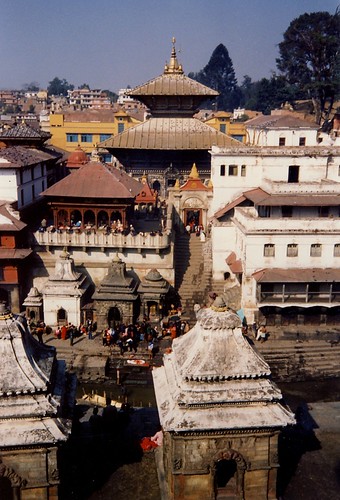
Nepal : Staggering out of the Incense Curtain


Some pieces of news make for extremely sad reading. Like for instance the one about Nepalese Prime Minister, an atheistic Prime Minister of a state that was once the world’s only official Hindu State and is now slowly evolving in leaps and jerks into a secular state. Koirala, described by the Indian Express as a senile, aging leader who refused to perform religious rituals at his parents’ deaths now wants to sit on the throne on which the kings sat and have the priests recite the “Saraswati Mantra”.

When the priests who ceremonially perform the rites, the head priest and the deputy head priest did not turn up, they were suspended. The irony of the situation was that these worthies did not turn up because in one of the gyrations of Nepal becoming a secular state from a Hindu one, the priests had already been suspended and had not been receiving their salaries. Unfazed by the irony though, the bureaucrats surrounding Koirala suspended the priests all over again lest the Prime Minister be angry.

B.P.Koirala could be ageing and senile but he is only mirroring the identity crisis that his country has and is going through eroding centuries of stability. In the days of the king- despot or not, things were clear. The King was regarded, by the common people at least, if by no one else as the living incarnation of Vishnu and maintained that appearance by residing in the Narayanhiti palace named after the deity and presiding over all key religious rituals of state. The astute King Birendra managed the balancing act between statesman and spiritual head well but his successor obviously hasn’t dome so well and egged on by the Maoists, the country has proceeded to throw away the baby as well as the bath water and is now throwing away not only the monarchy but the identity of the state itself without adequately under girding itself.

Of course a secular state itself is not a bad thing. Ideally, a secular state with separation of religion and government is preferable in most circumstances; a theocratic state can be either obscurantist or fundamentalist and both of these are menaces best avoided; theocracy in government has only one purpose – to manacle and shackle its people. And so while the resolve to start upon the journey to create a secular state is a good one, without adequate preparation, Nepal’s situation will not be very different from that of it Prime Minister- confused and unprepared to face reality and hiding behind centuries of tradition.

In a nation’s history, the journey is as important as the destination and the process has to be incubated and allowed to evolve. India’s own 60 year old journey is a good example Through Nehru’s rationalism, then soft Hindutva , hard Hindutva, debates on Raj Dharma and all that, we have arrived at an Indian road to secularism… and no the process is still not finished ….. political evolution of a State is forever a work in progress.

Its is to be hoped that the Maoists in Nepal will not be in so much of a hurry to abolish religion. May be they should do away with the seedier aspects of religion but leave alone the only roots that people cling to that give them solace. The sight of an ageing Prime Minister calling for religious Pundits despite his avowed atheistic beliefs is an indication that behind the senile exterior of the Head of government, lies a Nation’s yearning.

Monday, February 5, 2007

Treaties of Sagauli and Sinchula – Dismantling our Colonial Past

Sagauli is a small town railway station that I pass by on my way to Raxaul, the town on the Indian border town bordering the Nepalese town of Birganj. Sagauli is a railway junction on the Delhi – Muzaffarpur route and basically nothing more. Yet a treaty signed here as far back with subsequent modifications still determines the character of the relationship between India and Nepal and even the nature of India’s geography. On May 15, 1815, General Ochterlony (after whom the monument in the Kolkata Maidan is named) compelled the Gurkha leader Amar Singh Thapa, to surrender the fort of Malaon. And finally on November 28 1815, the Gurkhas signed the treaty of Sagauli. As per the treaty the Nepalese gave up their claims to places in the lowlands along the southern frontier, gave away Garhwal and Kumaon on the west of Nepal to the British and also withdrew from Sikkim.

Amazing that because of a battle fought in an obscure town, Sikkim gained a political identity, Garhwal and Kumaon became part of British India and today are part of India. But India’s colonial past casts a very long shadow and is not likely to go away soon. But those parts of it that tread on the foreign policies of our neighboring countries, we are beginning to revisit and that is a good thing. Admittedly, not all of this is out of charity. The Maoists in Nepal and the previous Nepali governments had taken the issue of abrogation of the treaty, signed on July 31, 1950, to New Delhi stating Nepal as an "unequal" one. India finally had also agreed to consider Nepal's request for reviewing the treaty, and the foreign secretaries of Nepal and India were assigned the task of handing the review.

Perhaps taking the cue from the Nepalese demand, India has moved pro actively to revise a similar treaty that was in operation with Bhutan which required that the country to be “guided” in the conduct of its foreign policy by the wisdom of the Indian government. Mrs. Indira Gandhi used this proviso to good effect when she ensured that after India , Bhutan was the only the second country to recognize the political entity of Bangladesh when the Pakistani Army’s surrender in the East had just occurred and the dust had yet to settle.

The dust on the Indo – Bhutan treaty is almost as old as the treaty of Sagauli. The first treaty concluded between British India and Bhutan—the Treaty of Sinchula was in 1865, and this was followed by the Treaty of Punakha dating back to 1903. The current treaty governing relations between the two countries dates back to 1949. But now ,India and Bhutan have "reviewed" and decided to "upgrade" the August 1949 treaty and the new agreement will reflect, according to Indian foreign ministry officials, "the contemporary nature of the India-Bhutan relationship" and lay the foundation for its future development. It is good that we are adapting to the changing geo political realities in the world and are beginning to abandon the Raj approach to our neighbors