
Reading about the reports about the Gujjar agitation and the fact that apparently the Rajasthan government is seeking out alternate Gujjar leadership, I wonder some times about the nature of our democracy. Democracy is meant to be an inclusive process, listening to different and even divergent voices and then arrive at a decision that, even if it does not please every body, at last is accepted by every body. This listening, consulting, decision making process is what is meant to separate out democracy supposedly as the most superior of governance mechanisms. But is democracy working? And if it is, then why are so many people angry?
Reflecting on how the State handles dissent today, not much of a difference is discernible between the Colonial times and now. The first response when any voice of dissent is heard is to repress it and crush it; hoping that the uncomfortable voices will eventually die out. Of course many do…. Many voices die down. But some don’t and in fact over some times, some voices get amplified. Then when things go out of control, you get people over for talks.
That looks very much like the cat and mouse game that Mahatma Gandhi and the British used to play. Gandhiji would launch one agitation or the other, he and his associates would be promptly packed off to jail, there would be a public outcry and then once a certain line was crossed, Gandhiji would be called for talks. More often than not, the talks would break down, after a while another agitation would be launched and then the whole cycle would repeat itself all over again.
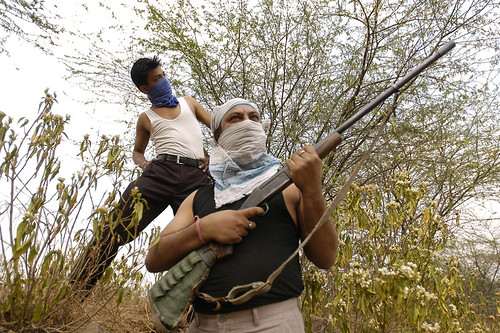
Sixty years and more after independence, what is the difference? Be it the Maoists or the Naxalites, the numerous underground outfits of the North East and now the Gujjars, as long as the movement is perceived to be small and inconsequential, the weapon of choice is the jackboot to stamp out the fire. If that doesn’t happen, either because there is a capable leader in the background like Col. Bainsla or strong grassroots support as is the situation with many of the underground groups, then they get called for talks after they have already caused a lot of mayhem.
In contrast, look at the khadi clad Medha Patkar and her Narmada activists or the Telengana activists who are pursuing their goals through peaceful means. No body gives a damn about them and the speeches that they make for they do not yet block traffic, stop trains and damage public property. So in the eyes of the State they and their cause can rot to high heaven.
In contrast, look at the khadi clad Medha Patkar and her Narmada activists or the Telengana activists who are pursuing their goals through peaceful means. No body gives a damn about them and the speeches that they make for they do not yet block traffic, stop trains and damage public property. So in the eyes of the State they and their cause can rot to high heaven.
We pride ourselves on being the world’s largest democracy and that is fine. We do hold elections every five years or some times even oftener and these elections do provide an opportunity for governments to be voted in and out and that is a lot more than what many of our neighbors might be able to say though Bhutan and may be even Nepal might be playing catch up.
But the nagging question before is: what eventually is the essence of democracy? The process of holding elections alone or also the (implicit) commitment that one man one vote is more than a slip of paper or a punch on the electronic voting machine – one man one vote equates into one man- one voice too. That each individual and his or her voice counts- that democracy is not synonymous with majoritarianism,- that the one with the largest demography may get to rule – but they rule in a spirit of bi partisanship on key issues by forging , maintaining and sustaining consensus through listening, accommodation and inclusion. Unfortunately we have not got there in the last sixty years …. May be, we will be there in the next sixty years.


